

从头到尾把 Ed Catmull 的职业生涯 (绝大部分就是 Pixar 生涯) 和 Pixar 历史述说了一遍, 在合适的时间点上连贯起大家熟悉的每一部 Pixar 电影的幕后故事和花絮, 再在其中穿插每一条创意公司的管理规则。
我是通过有声书的形式在上下班的火车上听完了这本书, 而且是我第一次接触有声书。 听有声书的体验与读书非常不一样, 例如吸收更加连贯但是要更加集中精神紧跟阅读节奏。 受了浮躁互联网年代的影响, 我发现自己已经很难长时间集中精神, 听书的时候一不小心拿出了手机就会走神, 而走神跟不上的时候往往又很难回头重来走失的一段。 这样对注意力要求提高自然很不习惯。另外遇到有感的段落没有办法高亮或做笔记, 只能手机里开一页笔记写下想法, 等后期再整理成文。 当然听有声书也有一个很大的好处就是走路坐车的时候可以利用时间听下去, 另外很难得地可以休息眼睛。
我本想听完后把笔记整理, 摘出创意管理的要点, 但是作者神奇地在最后一章自己把所有干货整理了一遍, 于是省去了很多力气。 除此以外, 有两点比较有趣的:
- 很多伟大的公司都是仰慕着在它之前的伟大公司启动或成长起来的,所以成长起来会有很多前一家公司的影子。 在科技界很多公司创始人小时都仰慕者仙童, HP, IBM, 苹果, 微软, Google, etc. 而 Ed 和 John Lasseter 小时候的梦想公司是 Disney, Pixar 成立的初衷也希望像 Disney 一样伟大 (以至于后来关系暧昧甚至求合体)。 我现在工作的公司也是一家受 Disney 文化影响很严重的公司, 这是我保持兴趣坚持读完这本书的最大原因。 我司是一家设计公司, 也是一家工程公司, 创意在公司文化里被奉若神灵。 一边读这本书的时候一边对照公司的管理方式, 马上可以见到某条方法为什么有效, 哪些方法不尽相同, 为什么不同。 切身感受非常深刻。
- 作者在倒数第二章写了作者和 Pixar 眼里的 Steve Jobs。 讲述了一些以前未被描述过的乔布斯。 Steve 从被苹果赶走之后才买了 Pixar 以及发行一部部电影, Ed 眼里的 Steve 在离开苹果的十年从一个偏执狂慢慢变得成熟, 懂得关心人, 且有了家庭。 Steve 渐渐变得感性不再觉得自己是天地间最牛屄的男人而是为自己拥有一整个公司的比自己厉害的创意人员而感到自豪, 甚至在这章的末尾说出了那句广为流传的话: 苹果电脑再好未来也是被扔进垃圾堆, 而 Pixar 的电影是会被永久流传下去的。
最后, 作为总结, 听写了一遍书的最后一章。
Thoughts for managing a creative culture.
Here are some principles we created during the years to enable and protect creative culture. Don’t make each statement a slogan at the risk of understanding them. Think of each statement as starting point, not a conclusion.
- give good idea to mediocre team they’ll screw up. give mediocre idea to **great team** they’ll either fix it or come up with something better. get the team right, they’ll get the idea right.
- when looking to hire people, give their potential to grow more weight than their skill level. What they’ll be capable tomorrow is more important than what they can do today. alway try to **hire ppl smarter than you.** always take a chance even when it seem like potential threat.
- if ppl not **free to suggest idea**, you lose. do not discount ideas from unexpected sources. inspiration come from anywhere. as manager you should cook ideas from stuff and constently push them to contribute.
- many reasons for people be uncandid, your job is to **find those reasons and address them.** if someone disagree with you, there’s a reason, your job is to find the reason. if there’s a fear in oraganization, there’s a reason for it. our job is to a) find whats causing it b) to understand it c) try to rule it out
- ppl hesitant to say things that might rock the boat. brain trust meetings, postmortems, notes day are efforts to reinforce the idea that its ok to **express yourself**.
- 1st **conclusion** we draw from successes and failures are **typically wrong.** measuring outcome without evaluating process is deceiving.
- do not fall in the ilusion that by prevanting error you won’t have errors to fix. **cost of prevanting errors is often far greater than the cost of fixing them**.
- **changes and uncertainties** are part of life. out job is not to resist them but to build the capability to recover when unexpected events occur. manager’s job is not to prevent risks, it is to make it safe to take them.
- **failure isn’t evil.** its necessairy consequence of doing something new. trust doesn’t mean you trust someone wont screw up, it means you trust them even when they do screw up.
- ppl ultimately responsible for implementing a plan must be **empowered to make decisions** when things go wrong even before getting approval. finding and fixing problems is everybody’s job.
- desire to run everything smooth is false goal. it means measuring ppl by mistakes they make, rather than by measure their ability to solve problems.
- don’t wait for things to be perfect before you share them with others. **share early and share often.** it’ll be pretty when we get there but it won’t be pretty along the way.
- company’s **communication structure should not mirror its organization structure.** everybody should be able to talk to everybody.
- be aware of making too many **rules.** rules can simplify life of managers, but demeaning to the 95% who behave well. address abuses in common sense, this is more work but ultimately healthier.
- **imposing limits** encourage creative response. excellent work CAN emerge from limit circumstances.
- **engaging with exceptional hard problems forces us to think differently.** organization is more resistent to change than individual. agreement doesn’t mean a change.
- don’t accidentally make stability a goal. **balance is more important than stability**.
- don’t confuse the process with the goal. improving process is what we need constently invest in, making good product is the goal.
该总结的都在最后一章
对“该总结的都在最后一章”的回应
《创新公司》热门书评
-
虽不能左右随机事件,但至少要努力发挥我们的优势。
35有用 3无用 斑斓的花 2015-04-05
我几乎不看动画片的,国内动画片完整看完的只有《海尔兄弟》,国外的看过《飞屋环游记》、《海底总动员》系列,而不巧的是这两部动画片都出自皮克斯动画工作室。这也是我想读这本书最主要的原因。而我能够坚持把这本书认真看完,正是由于皮克斯总裁艾德·卡特姆在书中的某段话揪住了我,他说:“我明白,皮克斯的成功,很大...
-
让《皮克斯》保持卓越的30个理念
16有用 0无用 小愚先声 2015-05-09
主要内容:皮克斯总裁讲述自己如何从一名梦想制作用科技制作动画的工程师,变成皮克斯的领导者的过程。并揭开了皮克斯内部创意的流程,分享了自己管理皮克斯的想法和理念,既让读者可以充分了解《玩具总动员》、《怪兽电力公司》、《飞屋环游记》等景点影片的幕后创作历程,还能从艾德·卡特姆充满哲学式的管理心得中获得关...
-
我们可以不做一颗螺丝钉吗?
13有用 0无用 子珂 2015-02-24
大多数工作让我觉得恐惧、厌恶 —— 因为人变成了螺丝钉,只是完成工作的工具而已。假如没有多少钱,这样的生活有什么意义?可大多数公司都在强调要奉献、996…… 工作,就一定要当螺丝钉吗? 这本书就是对于这个问题的回答。主要涉及到的内容可以分为: 1. 皮克斯是怎样成功的(怎样建设Creative...
-
创新总动员
11有用 0无用 Junchen 2015-02-08
原载于“与书俱乐部”(http://yushuclub.com/?p=256)Pixar的创造力是举世公认的。出品一部《玩具总动员》可能是运气,但是在接下来二十年中不断推出叫好叫座的神作则很难再归结为运气。如果你还认为孤证不立,那么Pixar在接管并改造迪士尼动画部门后,迪士尼老掉牙的公主音乐剧动画...
-
《创新公司》读书笔记,以及一些想法
7有用 0无用 Kafka 2016-08-13
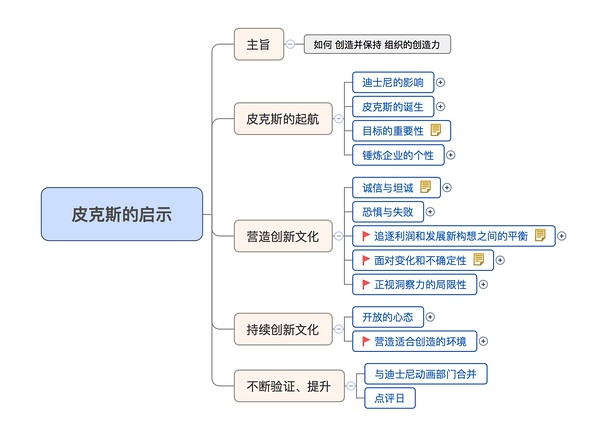 ...
...