

Chapter I The Great Seduction
An interesting book. Easy to read.
The author started with his experience of attending a camping trip about Web 2.0 in Silicon Valley. As a pioneer of Internet , he dreamed of making people accessing Bob Dylan or Bach everywhere with mobile devices, like making the world a more musical place. However, the camping trip disppointed him.
The topic of the camp was democratization. Media, information, knowledge, content, audience, author – all are going to be democratized by Web 2.0. Web 2.0 makes it possible that every ordinary people becomes a noble amateur, who “contributes” to the world, instead of using technology to bring more culture to the masses. Audience and author have become one, and culture is transformed into cacophony.
Apparently, the author is not a big fan of Web 2.0. He thinks democratization is undermining truth, souring civic discourse, and belittling expertise, experience, and talent. It is threatening the future of cultural insitutions.
The author is a pundit, a so called expert. Maybe that’s why he looks down upon the amateurs. For me I think there are two kinds of cultures. The newspapers, classic music, they are produced for those well educated people, those experts. But the characteristics of Internet makes it a platform to encourage interaction and participation. Both of them are cultures. Even those who have never been educated may have some special talents. How can we say a work made by amateurs are not arts. The criteria is not who makes it but what it is. Even Impressionism, it didn’t be accepted in the early age. But that’s also sort of creativity, right?
And then the author argues that Web 2.0 revolution only creates unreliable news and a chaos of useless information, and even makes the truth disappear. This undermining of truth is threatening the quality of civil public discourse, encouraging plagiarism and intellectual property theft, and stifling creativity. Well of course for amateurs we cannot believe every word they say. But can we also believe the experts, the authorities? Too many examples of the nonsense by so called authorities. Consumers are more likely to believe the online reviews by other consumers rather than advertising or other official information by the company. Why? Because the amateurs, the ordinary people like you and me, they are more honest and more authentic if they have the resources and access to the truth. And it’s up to you to decide which you believe and people should have the rights to choose and the ability to judge.
For intellectual property issue, well it is an issue. But the development of technology is trying to solve the problem. We now have the techniques to protect the copyright that people have to pay before they download the music or like some pdf files can be only accessible for a couple of days.
Finally he talks about the cost of democratization. The long tail doesn’t help in generating revenue. Too many choices also make time, the most limited and precious resource of all be challenged. And he took TV programmes as the example and discussed the downside of niche. The more specialized the niche, the narrower the market. The narrower the market, the more shoestring the production budget, which compromised the quality of the programming, further reducing the audience and alienating the advertisers. Well it is time-consuming. But everyone is different. Everyone’s needs are different. It’s our task to develop useful tools to search the exact contents that we need.
Good arguments, just so rude....
《网民的狂欢》热门书评
-
为什么只有一个韩寒?
80有用 15无用 jiaon 2010-04-20
焦建/文 这么多年来,我一直自嘲没上过学,只是混了个文凭,这话是实话。当年上学的时候,上课只是跟同学们联络感情的手段,没人管也不服从管教的结果是,更多的时候,我是泡在图书馆里长大的。囫囵吞枣的结果是,说法听了一堆,段子能讲一把,但学问不见长进。但说归说,好处起码还有一点,那就是不迷信所谓学者,也不盲...
-
毁掉我们的,恰恰是我们热爱的东西!
32有用 4无用 北京读书人 2010-04-30
(将本书序言摘于此,供大家了解本书内容) 要不是因为涉猎网络较深,我多半会以为现在就像1999年一样,硅谷正再度繁荣,网络幻想家正“东山再起”。 最近在旧金山,我遇到一位对网络极为虔诚的痴迷者。在一次霞多丽 ...
-
唯有加强自己,才是应对这个喧嚣不已的世界的法门
29有用 0无用 伊卡洛斯 2011-05-26
在我们这样的世界,指望媒介和社会来帮助自己进行事实判断和价值判断,显得有些奢望了。面对大规模的业余化,一个独立的人所应该掌握的人的人文社科类的知识:1)媒介素养2)逻辑学/批判性思维3)哲学基础(丧失哲学基础的后果,就是人活着没有特定的立场,而只有飘忽的立场,在飘忽的立场下,话语,充斥着的,便是情绪...
-
简单说几句
23有用 3无用 荷猪 2010-05-09
我是看到不许联想的书评才去看这本书。看之前的确希望看来自到网络“恶托邦”的有力驳斥。但可能我抱的期待太高,看完有点失望。虽然书里有很多的数据和现实来支持自己的观点,但是我还想指出几点我们看书前需要怀抱的常识:1、任何一个媒介的兴起都伴随着某个阶层的衰落,某个阶层的兴起;再说大一点就是任何新事物的发展...
-
精英 vs.草根
21有用 11无用 无机客 2007-10-13
《门外汉的崇拜:今日的互联网如何扼杀我们的文化和危害我们的经济》(The Cult of the Amateur:How Today's Internet Is Killing Our Culture and Assaulting Our Economy) 安德鲁·基恩自称是一名dot-com的变节...
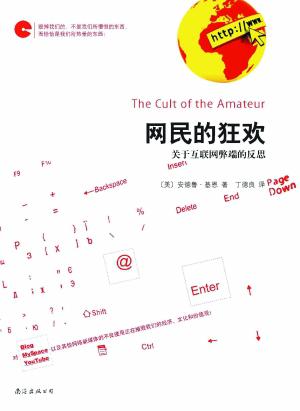
书名: 网民的狂欢
作者: [美] 安德鲁·基恩
出版社: 南海出版公司
原作名: The Cult of the Amateur
副标题: 关于互联网弊端的反思
译者: 丁德良
出版年: 2010-3
页数: 204
定价: 25.00元
装帧: 平装
ISBN: 9787544246774